Sacred Paths: Japan's Ancient Pilgrimage Networks
For over a thousand years, Japanese pilgrims have walked forest tracks, mountain passes, and coastal cliffs to reach sacred shrines and temples. These ancient routes form the backbone of Japan's walking trail heritage.
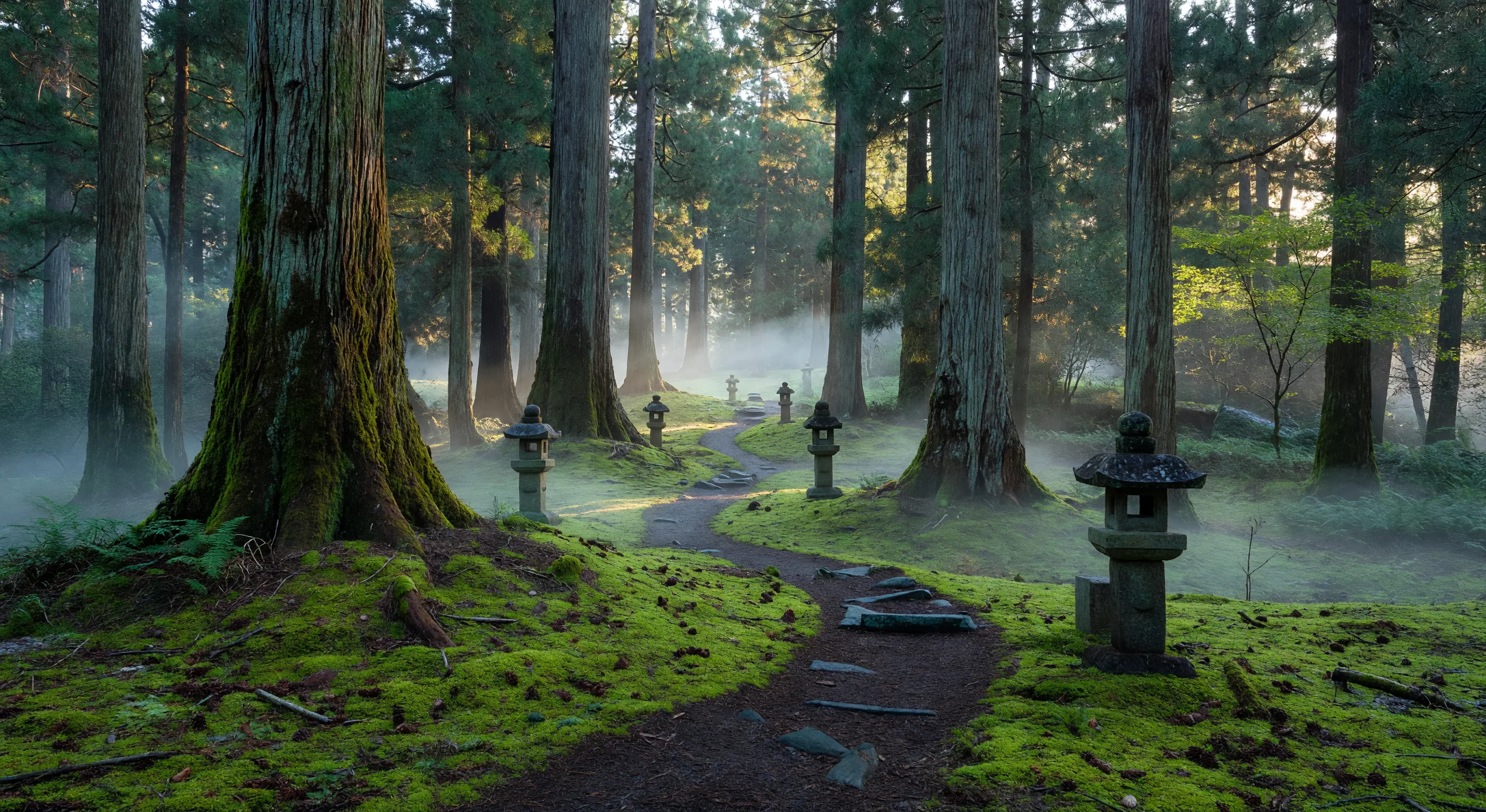
The Kumano Kodō of the Kii Peninsula is perhaps the world's most evocative pilgrimage trail — a UNESCO World Heritage network of paths converging on the three Kumano Grand Shrines. Emperors, nobles, and common people alike have walked these misty cedar corridors since the 9th century, seeking purification, healing, and spiritual transformation.
"The road to Kumano is not a path through the forest — it is a path through the self."
— Traditional pilgrim saying, Kii PeninsulaThe Shikoku 88 Temple Pilgrimage (Ohenro) is Asia's longest established pilgrimage circuit — 1,200 kilometres encircling Shikoku Island in the footsteps of the Buddhist monk Kūkai (Kōbō Daishi). Today, roughly 100,000 pilgrims walk or drive the route each year, identifiable by their white jackets (hakui) and pilgrim staffs (kongōzue).
The Nakasendō — the "Central Mountain Road" — is a former feudal highway connecting Edo (Tokyo) to Kyoto through the Japan Alps. Between Magome and Tsumago in the Kiso Valley, an exquisitely preserved 8-kilometre stretch of stone-paved path and traditional post towns offers walkers the most tangible connection to Edo-period travel in Japan.